Short answer
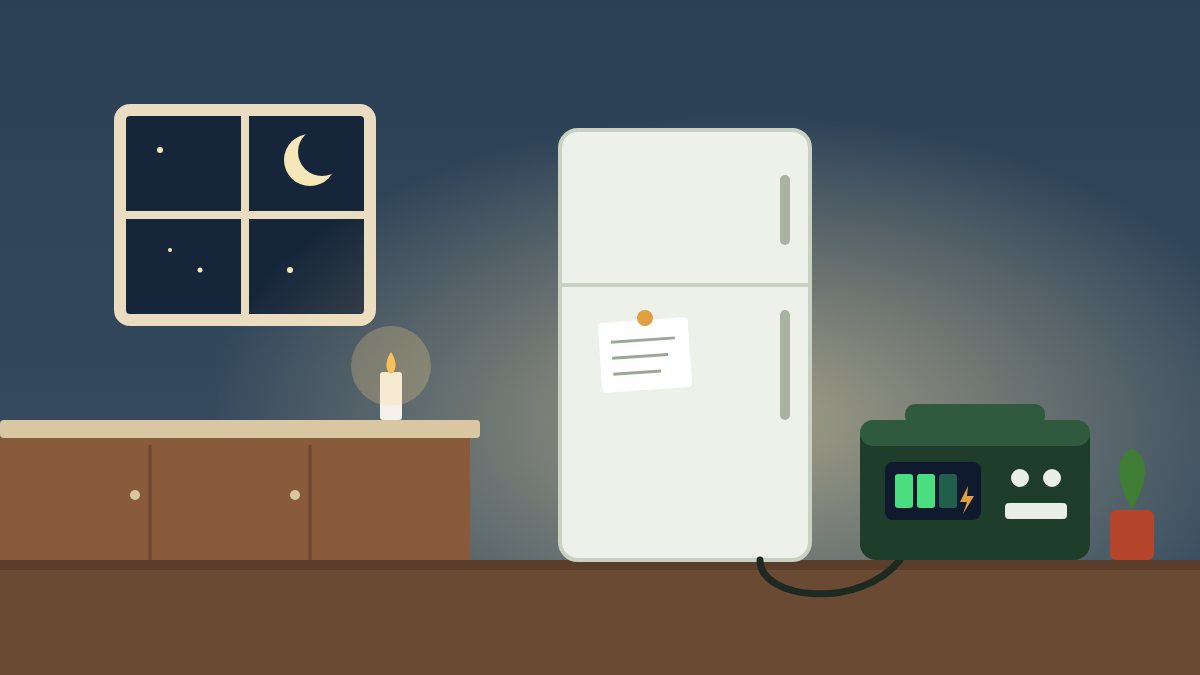
Usually about 12–18 hours for a typical modern fridge. It averages around 50 W, and a 1,000 Wh unit gives roughly 800–850 Wh usable after inverter losses. Older fridges, a warm kitchen or a door opened often will cut that down.
The math, step by step
A fridge draws about 150 W while the compressor runs, but the compressor only runs about a third of the time. That averages out to roughly 50 W, or about 1.2 kWh a day.
- Find the watts on your fridge’s label (or measure with a plug-in meter).
- Multiply by how often the compressor runs (about 1/3).
- Take 80–85% of the power station’s Wh as usable.
- Divide usable Wh by the average watts.
Work it out for your own home
Add the fridge, router, lights or CPAP and see the battery size and surge watts you need. Free, no sign-up.
Don’t forget the startup surge
Compressors can pull around 1,000 W for a second when they start. If the power station can’t handle that surge, it shuts off even with plenty of charge left. Check the surge (peak) rating, not just the continuous watts.
Safety: if you switch to a generator, run it outdoors only, at least 20 feet from the house, with a battery CO alarm inside. Never backfeed through a wall outlet.
How to make it last longer
- Keep the door closed; plan what you take out.
- Fill empty freezer space with water bottles before a storm.
- Keep the power station in the warmest room you have.
If the outage outlasts your battery, here’s what to keep and what to toss: Is the food in my fridge still safe after a power outage?
Some links on this page are affiliate links: we may earn a commission at no extra cost to you. See our Affiliate Disclosure.