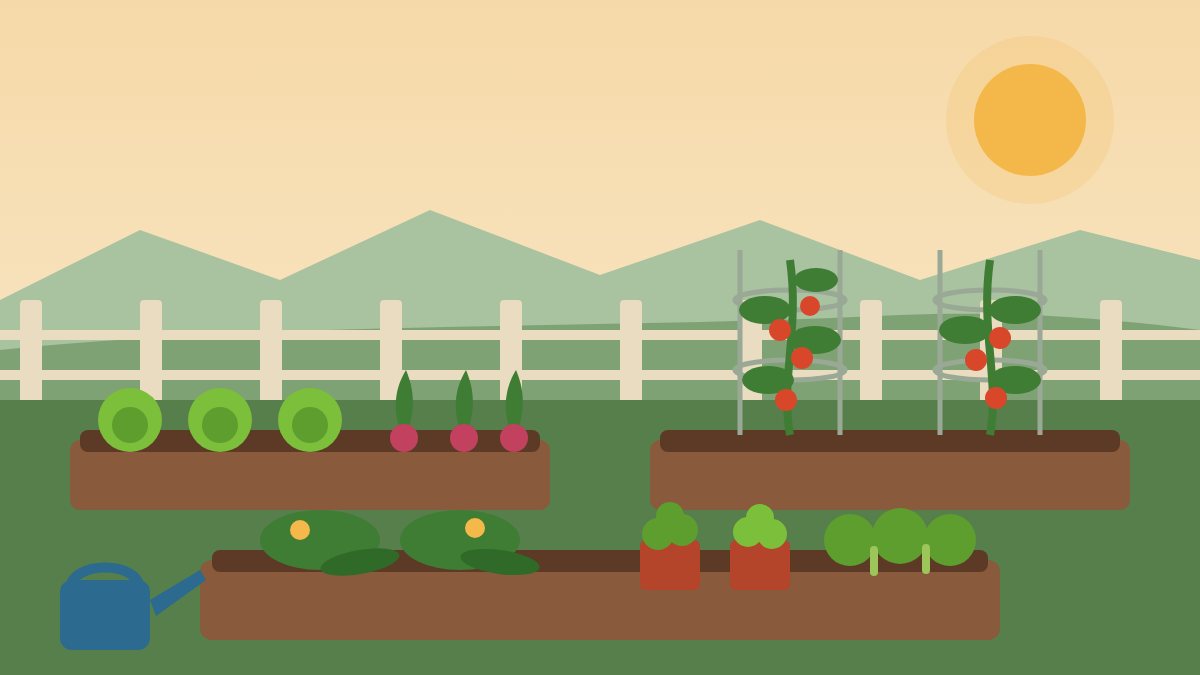
Short answer. Start with radishes, leaf lettuce, bush beans, zucchini, cherry tomatoes and herbs such as basil and parsley. Pick three, not six. Give them 6 to 8 hours of direct sun, about an inch of water a week, and plant each one at the right time for your area: radishes and lettuce a few weeks before your last spring frost, the other four only after it, once the soil has warmed.
Your first garden should build confidence, not frustration. These six vegetables were picked because they forgive the usual beginner mistakes, grow in a small bed or in pots, and give you something to eat within one season. Below you will find what each one needs, a planting chart you can keep, and the mistakes that most often ruin a first year.
Planting Chart for the 6 Easiest Vegetables
“Last frost” means the average date of the last spring frost where you live. Your county extension office publishes it, and it is the single most useful date in your gardening year. Days to harvest are typical ranges from seed (or from transplant, for tomatoes) and vary by variety and weather.
| Vegetable | Season | When to plant outdoors | Days to harvest | Minimum pot |
|---|---|---|---|---|
| Radishes | Cool | 4 to 6 weeks before last frost | About 22 to 30 | 6 in (15 cm) deep |
| Leaf lettuce | Cool | 2 to 4 weeks before last frost | 45 to 60 (baby leaves sooner) | 6 in (15 cm) deep |
| Bush beans | Warm | After last frost, soil at 60°F (16°C) or more | 50 to 60 | 3 to 5 gal (11 to 19 L) |
| Zucchini | Warm | After last frost, warm soil | 50 to 60 | 5 gal (19 L) |
| Cherry tomatoes | Warm | Transplant after all danger of frost | 65 to 90 from transplant | 5 gal (19 L) |
| Basil | Warm | After frost, when nights stay above 50°F (10°C) | Pick leaves as the plant grows | 10 in (25 cm) pot |
| Parsley | Cool-tolerant | Around the last frost date | Pick leaves as the plant grows | Half-gallon (2 L) pot |
Basil and parsley count as one pick (herbs), which is why the title says six.
1. Radishes
Radishes are the fastest win in the garden. Common varieties such as Cherry Belle are ready in about three to four weeks. Sow seeds directly in the soil in early spring, about half an inch deep, and thin the seedlings so each root has an inch or two of space. Keep the soil evenly moist: radishes that dry out turn woody and hot.
Pull them as soon as the roots reach the size you like. Left too long, especially once the weather warms, they turn pithy and the plants send up flower stalks. For a steady supply, sow a short row every week or two in spring and again in late summer for fall.
2. Leaf Lettuce and Other Greens
Leaf lettuce grows well in pots, window boxes and partial shade, which makes it the best choice if your sunniest spot is a balcony. Loose-leaf types are easier than heading lettuce because you can start picking outer leaves as soon as they are big enough, and the plant keeps producing from the center.
Lettuce likes cool weather. When summer heat arrives it “bolts”: it sends up a flower stalk and the leaves turn bitter. So plant it early in spring and again in late summer, and choose varieties labeled slow-bolting. A light afternoon shade in warm climates stretches the season.
3. Bush Beans
Bush beans need no trellis and produce over several weeks. The one rule that matters: wait for warm soil. Beans need soil and air above about 60°F (16°C); in cold, wet soil the seed tends to rot before it sprouts. In most of the US that means a week or two after the last frost.
Sow seeds about an inch deep and two to four inches apart. Pick pods while they are slender and before the beans inside bulge, and pick often: regular harvesting keeps the plants flowering. For beans all summer, plant a new short row every 10 to 14 days until midsummer.
4. Zucchini
Zucchini grows fast and produces heavily, which is both the good news and the warning. A couple of plants is usually more than a small household can keep up with. Give each plant about a square yard of space, or a 5-gallon container, full sun and steady water at the base.
Plant after the last frost in warm soil. Most plants start bearing about 50 to 60 days after sowing. Check every two or three days once fruits appear and pick them small, around 6 to 8 inches long. Missed fruits become giant, seedy marrows within days, and they slow the plant down.
5. Cherry Tomatoes
Cherry tomatoes are more forgiving than large slicing tomatoes. They crack less, ripen earlier and produce for weeks. One standard cherry tomato plant is usually enough for a family, and it grows well in a 5-gallon container.
Buy a healthy young plant rather than starting from seed in your first year. Plant it only after all danger of frost has passed and the soil has warmed, set it slightly deeper than it was in the pot, and put in a stake or cage on the same day, before the roots spread. Water at the base, not over the leaves, and keep watering steady, especially in containers, which dry out fast in summer.
6. Herbs: Basil and Parsley
Herbs are the easiest way to start if you have no yard at all. A pot on a sunny windowsill, balcony or doorstep is enough.
Basil is the most cold-sensitive plant on this list. Nights below about 50°F (10°C) can blacken the leaves even without a frost, so plant it outdoors later than everything else, or keep it in a pot you can bring inside. Pinch off the growing tips often to keep the plant bushy, and remove flower buds as they form.
Parsley is the opposite: it handles cool weather well and often keeps going into fall. The seeds are slow to sprout, so most beginners do better buying a small plant. Cut outer stems from the base and let the center keep growing.
Three Basics That Matter Most
- Sun. Tomatoes, zucchini, beans and basil want 6 to 8 hours of direct sun. Lettuce, radishes, parsley and most other herbs can manage with about 3 to 5 hours, which makes them the right choice for a shady yard or an east-facing balcony.
- Water. Most vegetable gardens need about an inch of water a week from rain or the hose. Deep watering once or twice a week beats a daily sprinkle, because it pushes roots down. Containers are the exception: in summer they can need water every day.
- Timing. Find your last spring frost date and plan around it. Cool-season crops go in before it; warm-season crops go in after it. Planting tomatoes or beans too early is the most common way to lose a first garden.
How Big Should a First Garden Be?
Smaller than you think. A good starting size is a 10 by 10 foot plot (about 3 by 3 meters) or a single 4 by 8 foot raised bed, with three to five kinds of vegetables. If you are growing in containers, five or six pots is plenty for the first season. A small garden you keep up with will give you more food than a large one that gets away from you in July.
For containers, use bagged potting mix, not soil dug from the yard, which packs down and drains poorly in a pot. Every container needs drainage holes. Bigger pots are easier because they hold more water and forgive a missed day.
Seven Mistakes Beginners Make
- Planting everything at once. Radishes and lettuce go in weeks before tomatoes and beans. One planting day for everything means some crops go in too early and others too late.
- Planting warm-season crops before the soil warms. Beans rot, tomatoes stall and basil blackens. A week of patience usually gains you more than it costs.
- Too many plants. Especially zucchini and tomatoes. Overcrowded plants compete for light and get more disease.
- Not enough sun. If a spot gets less than 6 hours, grow greens and herbs there instead of tomatoes.
- Shallow, frequent watering. It keeps roots near the surface, where they dry out first.
- Waiting too long to harvest. Oversized radishes, beans and zucchini are tough and slow the plant. Pick early and often.
- Using garden soil in pots. It compacts and suffocates roots. Use potting mix.
What You Can Do This Winter
If you are reading this in late fall or winter, you are not too late. You are early, which is the best time to plan.
- Look up your last spring frost date through your state’s extension service, and count back to see when radishes and lettuce can go in.
- Choose your spot now. Watch where the sun falls, and remember that summer sun is higher and reaches places that are shaded in winter.
- Order seeds in January or February, before popular varieties sell out. Look for words like “bush”, “compact” or “container” in the description.
- Grow something indoors in the meantime. Lettuce, basil and parsley can grow on a bright windowsill or under a simple grow light, and microgreens are ready in one to two weeks. See our guide to growing microgreens and herbs indoors in winter.
Quick Answers
What is the single easiest vegetable for a total beginner? Radishes, if you want something from seed; leaf lettuce, if you only have a pot. Both are fast and forgiving.
Can I grow all six in containers? Yes. Use the minimum pot sizes in the chart above, and give zucchini and tomatoes the largest containers you have.
Should I start from seeds or buy plants? Sow radishes, lettuce and beans from seed directly where they will grow. For tomatoes, basil and parsley, buying young plants is easier in your first year.
Do I need fertilizer? Most garden soil with some compost mixed in is enough for these crops. Beans need very little. Potting mix runs out of nutrients faster, so container plants, especially tomatoes, benefit from a light feeding once they start to fruit.
What if a late frost is forecast after I plant? Cover tender plants overnight with a sheet, bucket or row cover, or move pots indoors. Radishes, lettuce and parsley usually tolerate a light frost.
Next step. Start with something you can grow right now: our guide to microgreens and herbs indoors in winter. For more, browse everything in Garden & Grow.
Sources: Iowa State University Extension, Vegetable Harvest Guide · University of Georgia Extension, Vegetable Planting Chart (C963) · Texas A&M AgriLife Extension, Recommended Vegetable Varieties · University of Illinois Extension, Cool-Season Vegetables · University of Illinois Extension, Growing Vegetables in Containers · Alabama Cooperative Extension, Container Vegetable Gardening (ANR-1139) · Oregon State University Extension, Container Gardening · NC State Extension, Container Garden for Edibles · Utah State University Extension, Beans in the Garden · Virginia Cooperative Extension, Beans (SPES-676) · Purdue Extension, Beans (HO-175) · University of Maryland Extension, Tomatoes · University of Minnesota Extension, Growing Tomatoes · UMass Extension, Basil · The Old Farmer’s Almanac, Vegetable Gardening for Beginners
This article contains no affiliate links.